A kiln under the apple tree
I live in the center of Oslo, which is a fine place to be a person and a poor place to be messy. I tried the ceramic workshops here. They are pleasant, well-lit, and run on schedules. I am not run on schedules. I want to make things when the wanting arrives, and I want to do it with both elbows in something I will later have to scrub off the floor. Shared studios, however generous, were not built for that.
So I went back to the garage.
The building stands next to my parents' house. It was a smithery once, then a car workshop, and now it is a place that tolerates me. My great-grandfather built it together with the house and, for reasons that were probably perfectly reasonable in his century, buried a considerable number of horseshoes in the ground around it. For luck. I am willing to believe this worked. I consider myself a lucky person, and I am not interested in testing the alternative.
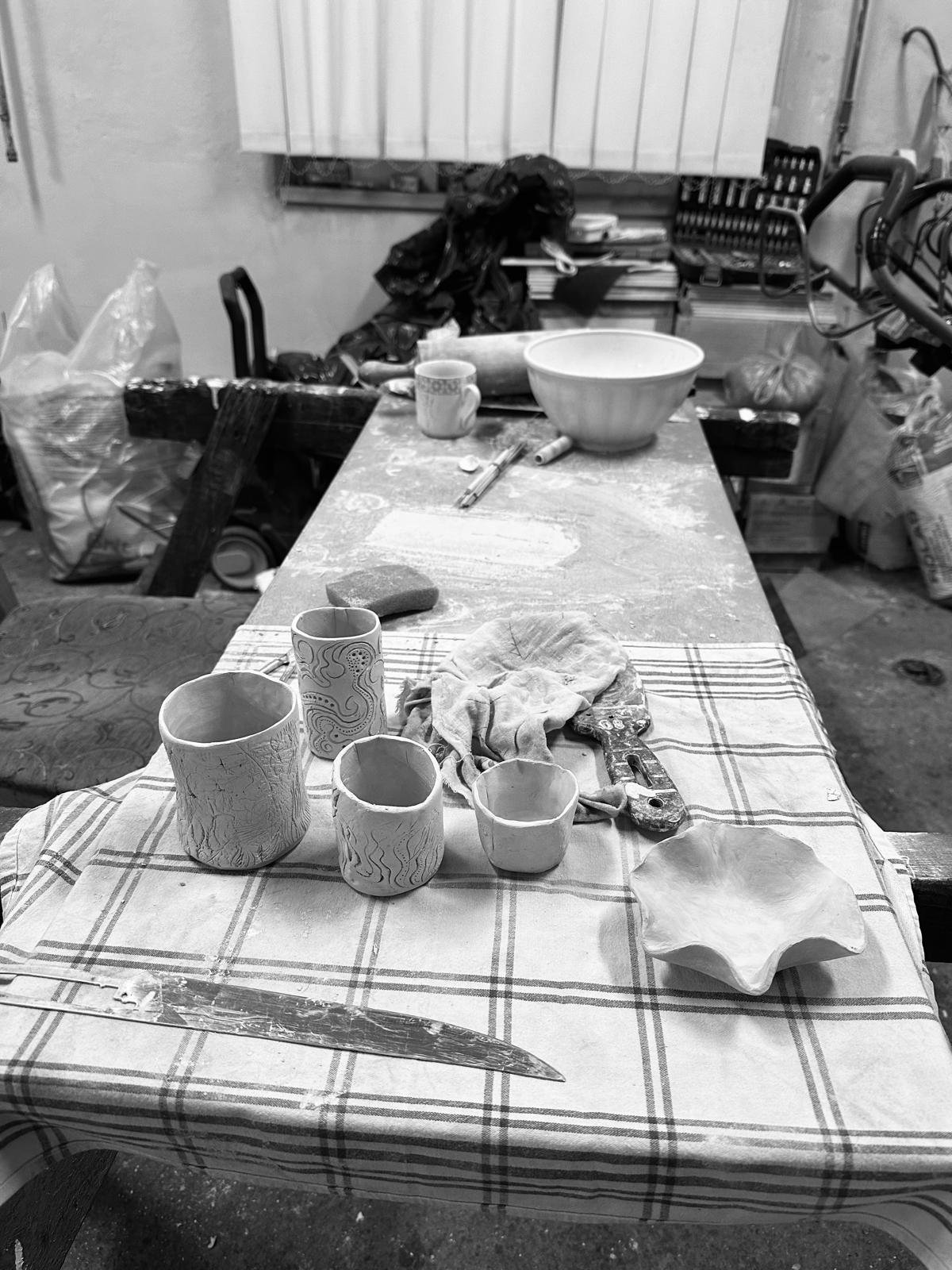
The studio I made for myself was the simplest possible arrangement of things that already existed. A surface. A few buckets. Tools my father brought home from his work and quietly placed where I would find them. The whole setup could be carried outside on a bright day to follow the sun, and carried back in when summer made the garden unworkable. I liked it more than I have liked most rooms.
I started in the middle of a slow breakup. Clay turned out to be excellent for that. It asks for your hands and a small portion of your attention, and in exchange it gives you back a sorted version of your own thoughts. The first cups were not good. I left a few at the workshop and someone, I never found out who, dropped something on them. They cracked while drying. I was briefly annoyed, then philosophical. They were first cups. I learned to hide the next ones better.
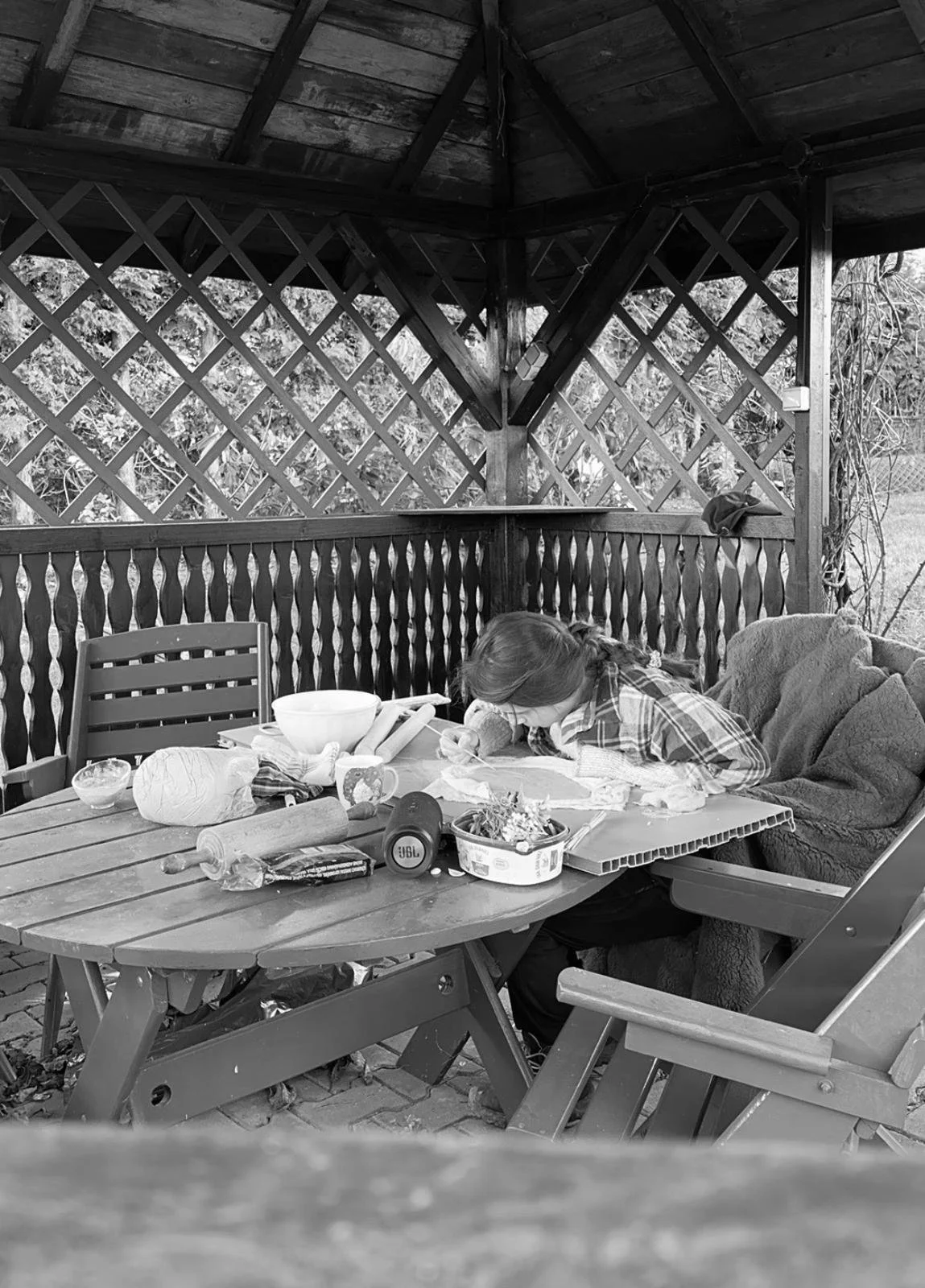
Each piece after that was a little less embarrassing than the one before.
At a certain point I had a small assembly of objects that needed to be fired, and no fire to fire them in.
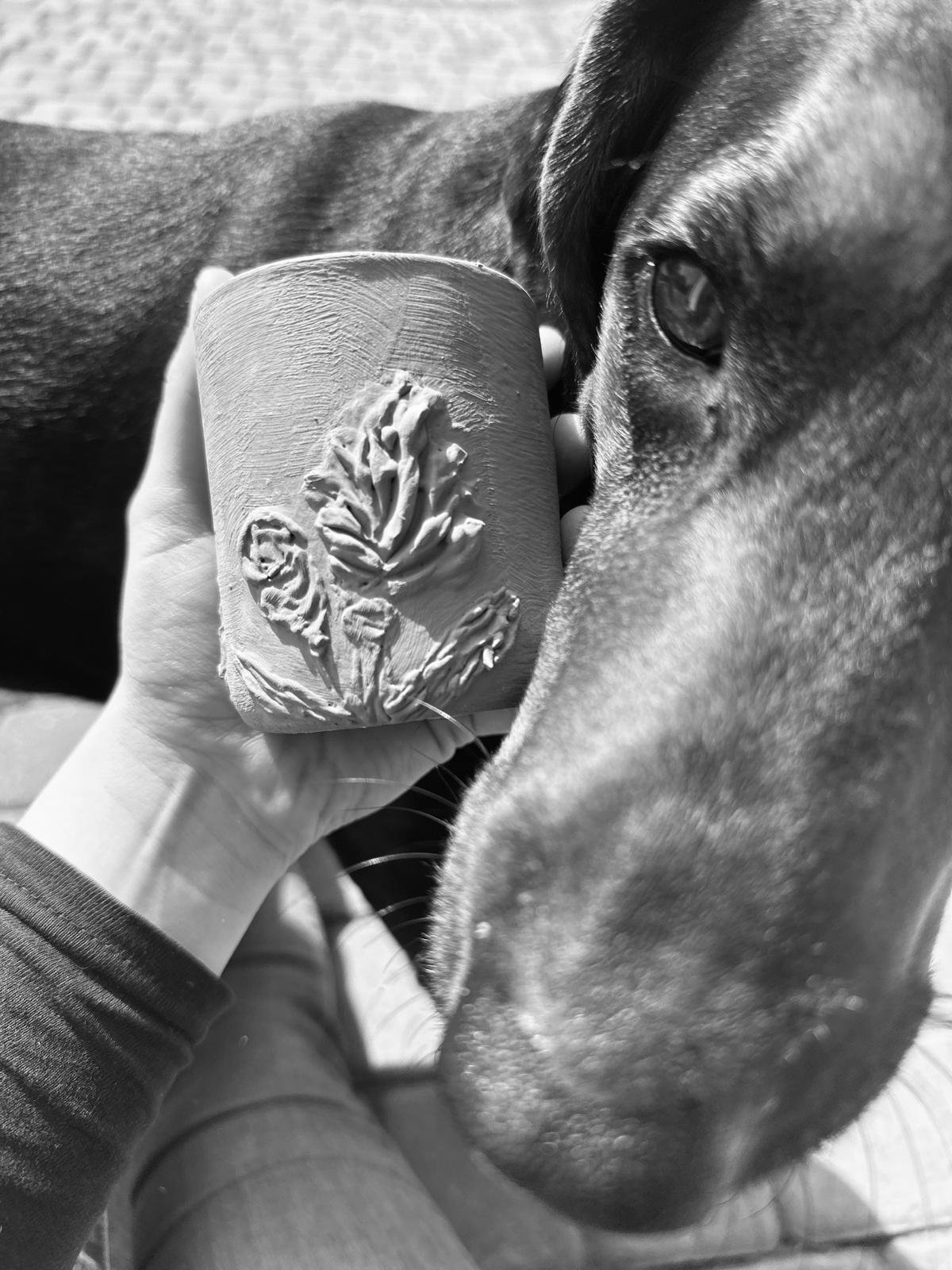
In Oslo this is a solved problem. In the village it is not. I assumed, as one does, that somebody nearby must run a kiln. Nobody did. Buying my own felt extravagant for a person who shows up on weekends. So the question quietly rephrased itself, the way questions do when you leave them alone for long enough.
I would build one.
The idea came from Voss, where I had stayed on a farm with Astrid and Tord. They had a kiln in their garden. It looked, to my untrained eye, achievable. This is the kind of optimism that gets people into nine-month projects.
I started in the library, which was beautiful, and took out every book in the ceramics section, which was not many. Most of them turned out to be about markings. Where this teacup was made, who stamped it, which workshop in which century. Useful if you are an auctioneer. Less useful if you are trying to build a small brick oven under an apple tree. Two of them had something I could work with. The rest I returned with polite disappointment.
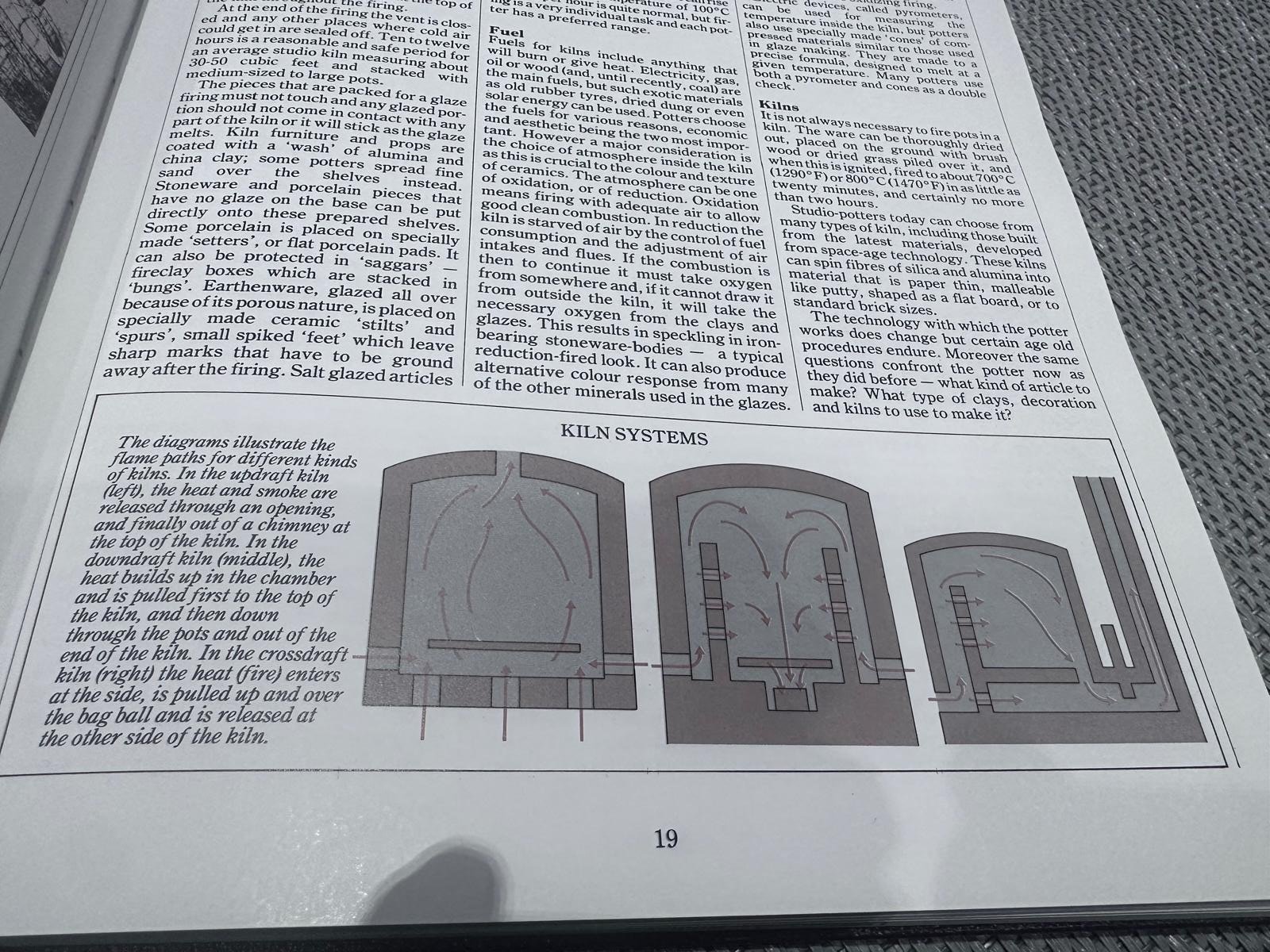
So I drew. Mostly air circulation diagrams, because that was the part nobody had explained, and the part that mattered. My father, who is generous and an engineer at heart, offered to build me something rather more advanced, involving a steel barrel and gas. It would have worked. It would also have been very hot, and I know what I am like with very hot things. I declined gently. He took it well. We brainstormed alternatives, and the alternatives improved my drawings.
In October, I started digging.
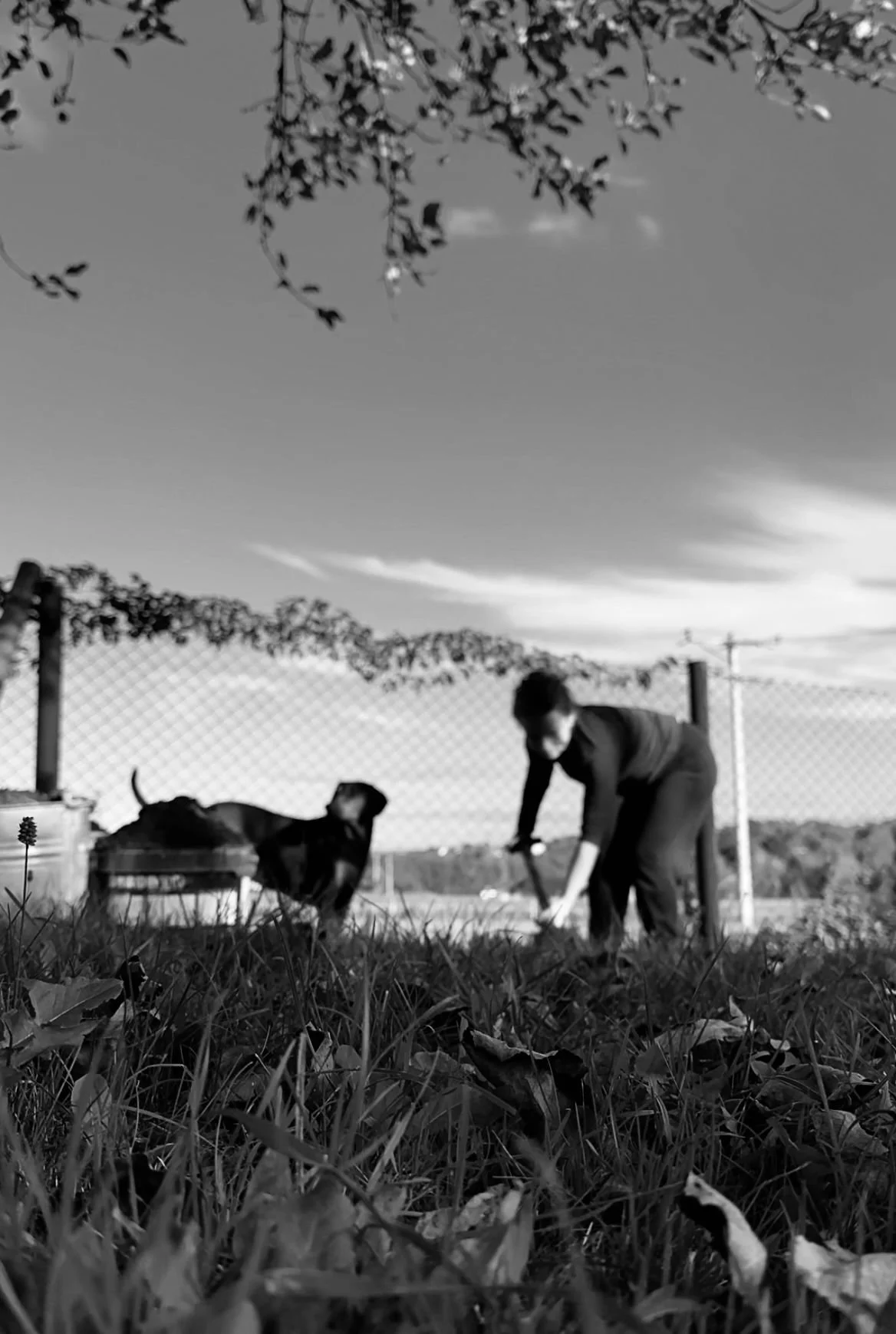
I picked the far end of the garden, under an old apple tree, which felt right in a way I am not going to try to justify. I dug a decent hole with a spade. I used old bricks from the workshop, the kind every garage has and nobody can quite remember acquiring. I built a small igloo. I insulated it with the same clay I had been collecting, which felt satisfying in a circular way. There was a little shelf inside. The entrance was suitable for feeding wood in close to the ground, and not suitable for much else.
The dog supervised. She had not come to the library, which was probably for the best, but she attended every outdoor session of construction with the focus of someone keeping a list. She was curious. Occasionally she tried to play. I was rarely available to play, but I appreciated the offer.
I finished the kiln in autumn and did not light it.
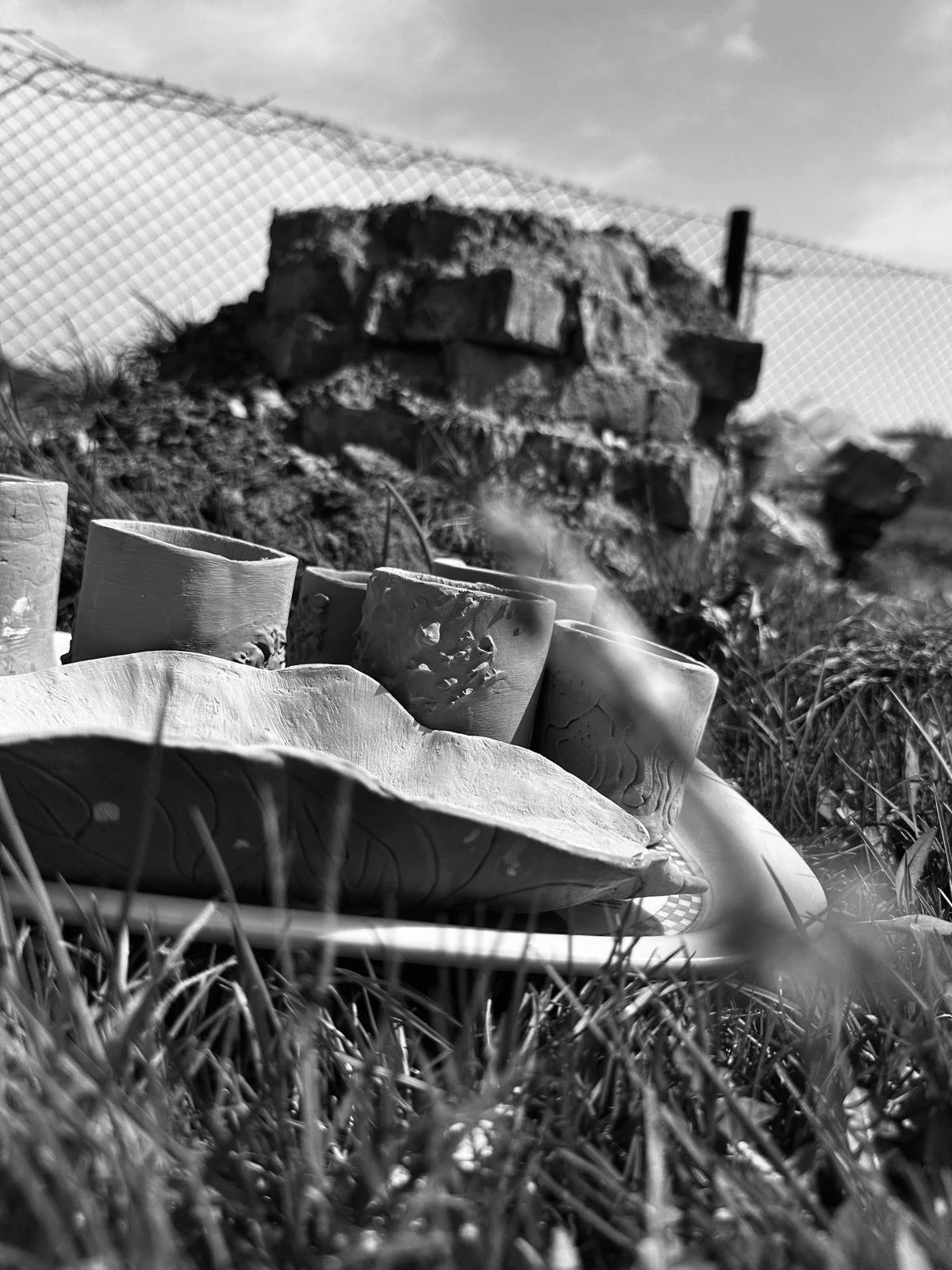
This was not patience. This was that I did not visit my parents for a while, and when I did visit it was Christmas, and Christmas is not the season for crouching in a frozen garden testing experimental brickwork. So the kiln sat under the apple tree through the winter, lidded, waiting, solidifying.
From August, when I decided to build it, to May, when I finally lit it, was nine months.
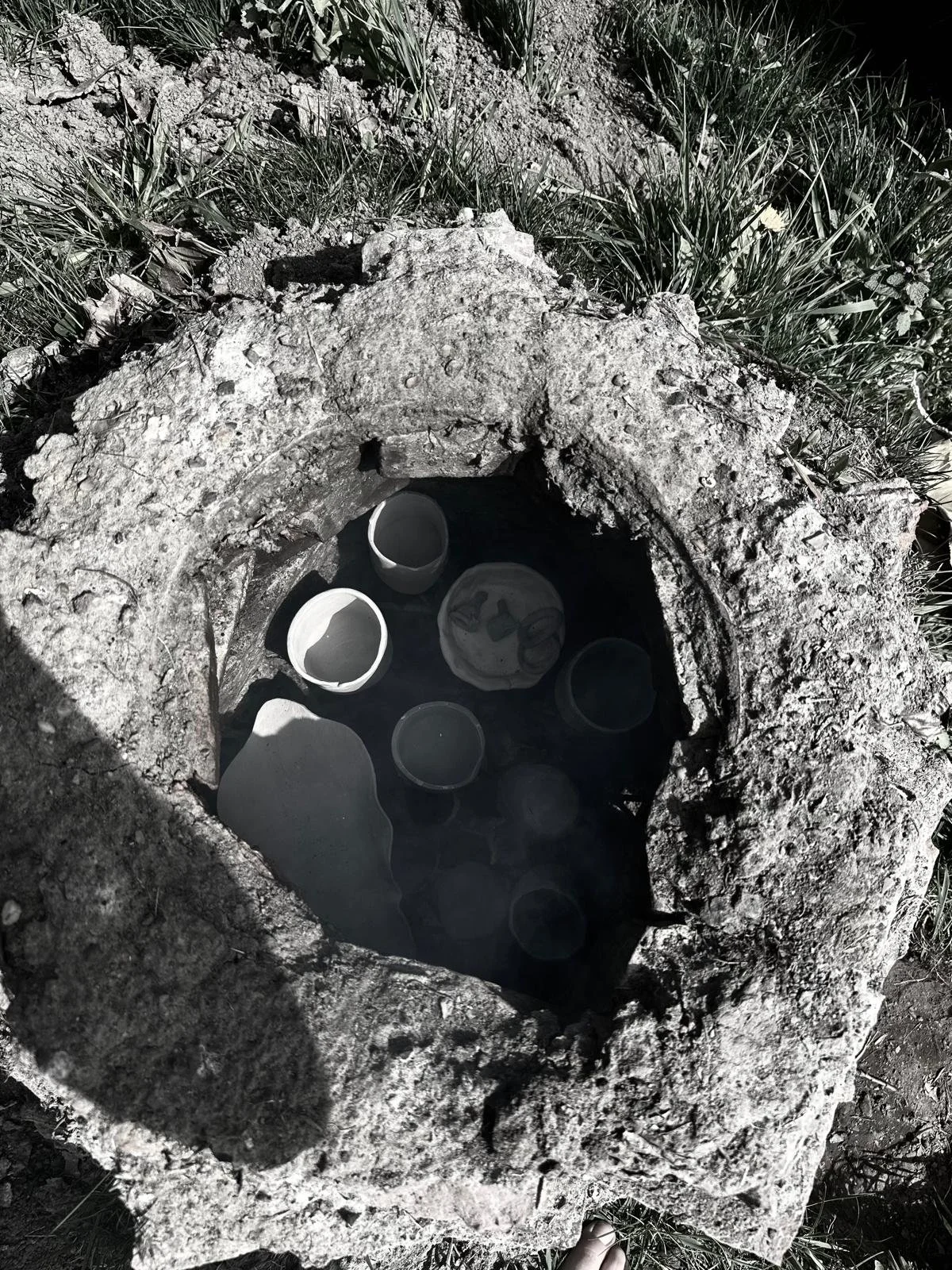
The insulation could have been better, and that 900 degrees, which is the threshold at which clay stops being mud and starts being ceramic, is harder to reach than the books had led me to assume. Higher temperatures, the kind that allow real glaze color, were not even on the table. I had not known this when I started. I know it now.
What happened in May, and how I prepared for it, and what came out of the apple tree kiln when I finally opened the lid, is a story for another time.
This one ended with quiet satisfaction of having built something that nobody had told me how to build.